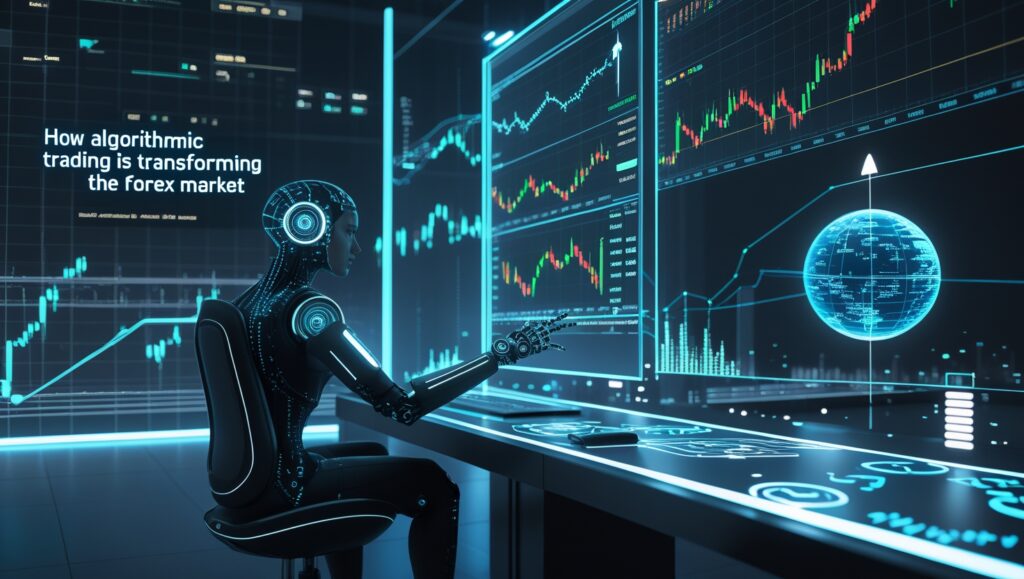
Algorithmic trading or “algo trading” is a trading method where computers and software programs automatically execute orders. These algorithms are based on pre-defined rules such as price, volume, timing or some other market indicator signal. This means that whenever these specific conditions are met, the system automatically buys or sells without any human intervention.
This process removes human emotions from trading, which often results in losses. Algorithmic trading requires both speed and accuracy, so it is very popular among institutional investors and experienced traders. Algorithms analyze market data very quickly and make decisions in microseconds that are difficult for a human to make.
In the forex market, where trading occurs 24/7 and price fluctuations are rapid, algorithmic trading allows traders to take advantage of real-time opportunities. But this method is only effective if the algorithm has been properly tested and coded accurately. If implemented correctly, algorithmic trading can make your forex strategy powerful.
How Algorithms Work in Forex Markets:
The forex market is run by algorithms that automate trading decisions through a precise and fast system. These algorithms are specially designed to analyze historical data, price movements, volume levels, and technical indicators. When a specific condition or trigger is matched, the algorithm immediately places an order either to buy or sell without any manual intervention.
For example, if the algorithm is programmed to place a buy order when the EUR/USD price crosses 1.1000 and is above the moving average, it does so in milliseconds. Algorithms continuously monitor real-time data and execute trades based on that analysis. There is no emotional decision-making, only logic and data-driven decision-making.
The Forex market is very liquid and prices change every second, so algorithms are very effective. They also enable high-frequency trading, where multiple trades are executed every second. Algorithms not only execute trades but also automatically manage stop-loss and take-profit levels.
These smart systems make trading fast, consistent, and less emotional, but they need to be developed and monitored correctly.
Benefits of Algorithmic Trading in Forex:
The biggest advantage of algorithmic trading is speed. When you trade manually, it takes time to make a decision, but algorithmic systems make decisions in milliseconds. Another advantage is that it eliminates emotional trading. Humans often make wrong decisions due to greed or fear, while algorithms only follow logic and predefined rules.
Accuracy is also a big plus point. When you trade manually, there is a chance of error wrong lot size, wrong entry price, etc., but algorithmic systems calculate everything and perform flawless execution. There is also a backtesting facility where you can test your strategies on historical data and see to what extent they are effective.
With algorithmic trading, you can monitor and trade multiple currency pairs at a time, which is difficult to do manually. This system works around the clock, meaning you do not miss a market opportunity even when you are sleeping. In short, it is a time-saving, emotion-free, and data-based trading approach.
Risks and Limitations of Algorithm Trading:
While algorithmic trading has its advantages, it also has some risks and limitations. The first risk is system failure. If your internet connection goes down or your software crashes, your live trades can be affected. The second risk is over-optimization. Many traders polish their strategy so much that it works only for past data, but fails in the real-time market.
Technical knowledge is very important in algorithmic trading. If the coding is not correct, the strategy can give wrong signals. The market is sometimes unpredictable, such as due to economic news or geopolitical events, and the algorithm may fail to cope with those sudden changes. This can lead to losses at times if the stop-loss is not placed correctly.
And another important thing is that not all brokers allow algorithmic trading. Some brokers impose restrictions or provide slow execution, due to which algorithm trading is not effective. Therefore, apart from creating a system, broker selection is also important.
Popular Algorithmic Trading Strategies:
Several popular strategies are used in algorithmic trading. The most common is the trend-following strategy, where the algorithm follows the price trend and trades in that direction. For example, if the market is consistently moving up, a buy order is placed.
Another strategy is arbitrage trading, where the algorithm compares the prices of different brokers and instantly buys low and sells high. Fast execution is very important in this strategy.
Scalping is also a popular method where the algorithm profits from small price movements. In this, the target profit of each trade is small but the volume is high. The advantage of this is that small earnings give good profits.
There is also a news-based trading strategy where the algorithm makes fast decisions around economic events. Timing is the most important in this strategy. Before using algorithmic strategies, it is important to backtest and optimize them properly.
Choosing the Right Algorithmic Trading Platform:
Choosing the right algorithmic trading platform is very important. First of all, make sure that the platform is reliable and stable. It should not crash in the middle of the market or execute orders with delays. Another factor is broker compatibility. Does your broker provide APIs? Does it provide high-speed execution?
The user interface of the platform should also be friendly so that you can easily develop strategies. Some platforms work with coding knowledge, such as MetaTrader (MT4/MT5) where you can create trading bots in MQL language. There are also some no-code platforms where drag-and-drop tools are available.
Security is also important. Your trading data and algorithms must be secure. It is even better if the platform also provides real-time monitoring, backtesting tools, and performance analytics. The platform should also receive regular support and updates. The right platform plays a major role in making your algorithmic strategy successful.
Conclusion:
Algorithmic trading has given a new dimension to the forex market. This method is based on speed, logic, and automation, which is ideal for today’s fast-paced trading world. But you can only benefit from this system if you implement it properly. Every trader needs to test their strategy, monitor the system, and have a proper plan for risk management.
This technique is best for those who want to make data-driven decisions without emotions. In the future, algorithmic trading will become even more advanced, and the integration of artificial intelligence will make it even more powerful. But along with technology, human oversight is also necessary so that any unexpected situation can be handled. If you are a serious trader, then seeking out and using algorithmic trading can give you an edge in the market.
FAQs:
- What is algorithmic trading and how does it work in the forex market?
Algorithmic trading is a method where computer programs automatically execute trades based on pre-set rules like price, volume, or technical indicators. In the forex market, algorithms scan real-time data and place buy or sell orders in milliseconds when specific conditions are met. This system removes emotional decision-making and increases speed and efficiency.
- What are the main benefits of using algorithmic trading in forex?
The major benefits include high-speed trade execution, accuracy, emotion-free decision-making, and the ability to trade 24/7. Algorithmic systems can also monitor multiple currency pairs simultaneously and allow backtesting of strategies using historical data, giving traders more confidence before going live.
- Are there any risks or limitations to algorithmic trading?
Yes, there are several. These include system or internet failure, over-optimization of strategies that only work on past data, and coding errors. Also, algorithms may not respond well to sudden market changes due to economic news. Some brokers may not support or optimize for algorithmic trading either.
- What types of algorithmic trading strategies are commonly used?
Popular strategies include trend-following (trading in the direction of the market), arbitrage (profiting from price differences across platforms), scalping (making small, frequent profits), and news-based trading (making fast trades around major economic announcements).
- How do I choose the right platform for algorithmic forex trading?
A good platform should be reliable, compatible with your broker, and offer fast execution. It should support strategy building (with or without coding), provide backtesting tools, real-time monitoring, and ensure data security. Platforms like MetaTrader 4/5 are popular for coders, while some no-code platforms are also available for beginners.